
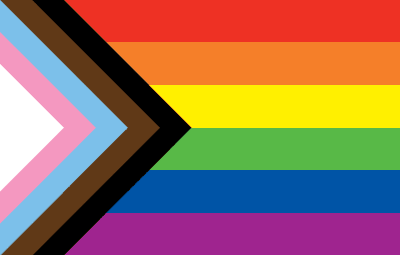
On April 16, 2025, the United Kingdom’s Supreme Court delivered a ruling that will be remembered not just for its legal consequences, but for what it revealed, and ignited. In a decision that reverberated through newsrooms, LGBTQ+ networks, and political circles across the globe, the court ruled that the term “woman” under the UK’s Equality Act 2010 refers strictly to biological sex.
In other words: trans women, regardless of lived experience or legal gender recognition, are not considered women under this law.
It’s a blow. A defining moment. And quite possibly, the spark of something larger.
What the Court Said. And Didn’t Say
The case stemmed from a challenge to the Scottish government’s decision to include trans women with Gender Recognition Certificates (GRCs) in its gender representation quotas for public boards. For Women Scotland, a campaign group known for pushing gender-critical positions, argued that this violated the legal definition of “woman” under UK law.
The Supreme Court agreed.
In a never expected ruling, the judges determined that the Equality Act is clear: its language refers to biological sex and not gender identity, and not the sex listed on a GRC. Even if a trans woman has gone through the legal process to change her gender, the law, as now interpreted, doesn’t recognize her as a woman in contexts governed by the Equality Act.
Trans people are still protected from discrimination under the Act, but the reach of those protections has now been sharply curtailed.
The UK, Dancing to an American Tune?
Let’s be honest: this ruling doesn’t come out of nowhere. It comes in the wake of an increasingly U.S-style culture war that’s taken root in British politics and media. The UK – once seen as more moderate in public discourse – is now leaning hard into trans-exclusionary rhetoric, moral panic over gender, and the weaponization of “biological facts” as a political cudgel.
It’s no accident that some of the loudest voices behind this push echo talking points straight from the American conservative playbook: protect the children, preserve women’s spaces, and insist that trans rights are somehow a zero-sum threat to everyone else’s.
But unlike the U.S., where legal protections vary state-by-state, the UK has a national legal system. Which means one ruling like this affects everyone; from Brighton to Belfast.
This isn’t British exceptionalism. It’s British compliance with a global wave of transphobia.
What This Means for Trans People in the UK
Let’s break this down.
- If you’re a trans woman, even one with a Gender Recognition Certificate, you are no longer legally considered a woman in key areas of public life.
- You can be excluded from women-only spaces and roles.
- Your identity, as recognized by the state, now has a big fat asterisk next to it.
This isn’t just a bureaucratic shift. This is erasure with legal teeth. And to me, it’s utter bullshit!
The Equality Act was once held up as a shield, now it’s being twisted into a sword. And for every inch the law retreats from inclusivity, society follows. We can expect this ruling to embolden transphobic voices, policies, and hiring practices. It will ripple out into healthcare, education, housing, and more.
Let’s be very clear: this ruling will make life harder, scarier, and more unstable for trans people across the UK and, I believe, around the world.
A Human Rights Regression
This ruling is more than a domestic policy shift. It’s a human rights issue.
The European Union, by contrast, has continued to build frameworks that affirm and protect gender-diverse identities. From healthcare to identity recognition to anti-discrimination protections, the EU has largely moved in one direction: forward. Not always perfectly, but at least progressively.
If the UK ever considers rejoining the EU – and let’s not pretend that door is completely closed – then this ruling should be a dealbreaker. The EU cannot and should not admit a country that rolls back minority protections under the guise of legal clarity.
This should be on the table during every future negotiation. Not as a bargaining chip, but as a baseline. If the UK wants to be part of a modern European community, then its laws must reflect basic respect for all of its citizens—including trans ones.
Will This Spark a New LGBTQ+ Movement?
It might.
Not a second Stonewall, maybe. But a second wind.
History tells us that when marginalized groups are pushed to the edge, something eventually gives. This ruling may have set the UK’s legal clock back, but it might just reawaken the political urgency that had, in some spaces, gone quiet.
You can already feel it simmering: trans creators, activists, allies, and queer people across the UK are organizing. They’re writing. They’re showing up in the streets and online. They’re tired of being polite, tired of being misrepresented, and tired of waiting for the world to “catch up.”
Injustice has always been a catalyst for change and this one is so stark, so deeply felt, that it might galvanize a whole new generation of queer and trans activism.
And let’s not forget: young people overwhelmingly support trans rights. This ruling, rendered by an gobsmackingly dusty institution that feels increasingly out of touch, may end up radicalizing more voters than it pacifies.
What Happens Next?
The ball’s now in the hands of Parliament, policy-makers, and civil society.
One path forward would be to amend the Equality Act to explicitly include gender identity alongside biological sex. That won’t be easy as it’ll be met with fierce opposition, but it would send a clear message: the UK is not in the business of legalizing erasure.
In the meantime, grassroots resistance will likely ramp up. Trans-led organizations will demand better. Legal challenges will continue. People will march, write, speak, create, and refuse to be silenced.
Because that’s what communities do when they’re cornered. They rise.
Final Thoughts: We All Have a Role
This ruling is not an isolated event. It’s a signal. A clear one.
A signal that rights can be taken back just as easily as they’re granted. That progress, once assumed permanent, is fragile. That we are, whether we like it or not, living through a cultural moment where being neutral is not an option.
To those who think this doesn’t affect them: it does. Because a society that reduces rights for one group becomes dangerous for all of us.
To allies: now’s the time to speak louder. Donate, amplify, organize, vote. Not in a performative way, but in the deeply necessary way that change demands.
And to the trans and nonbinary people reading this: you are real. You are valid. And you are not alone. Not now. Not ever.
And here’s the final, uncomfortable question: If the state can now define what a woman is; who’s next? Is this really about protecting women, or about controlling them? And if so, will any of us truly be safe once those definitions become law?


 The Roine Playground
Lämna en kommentar