
Every few days, LinkedIn show me a post from a recruiter or hiring manager who just MUST share a “weird” message they got from a candidate.
You’ve seen them, I guess.
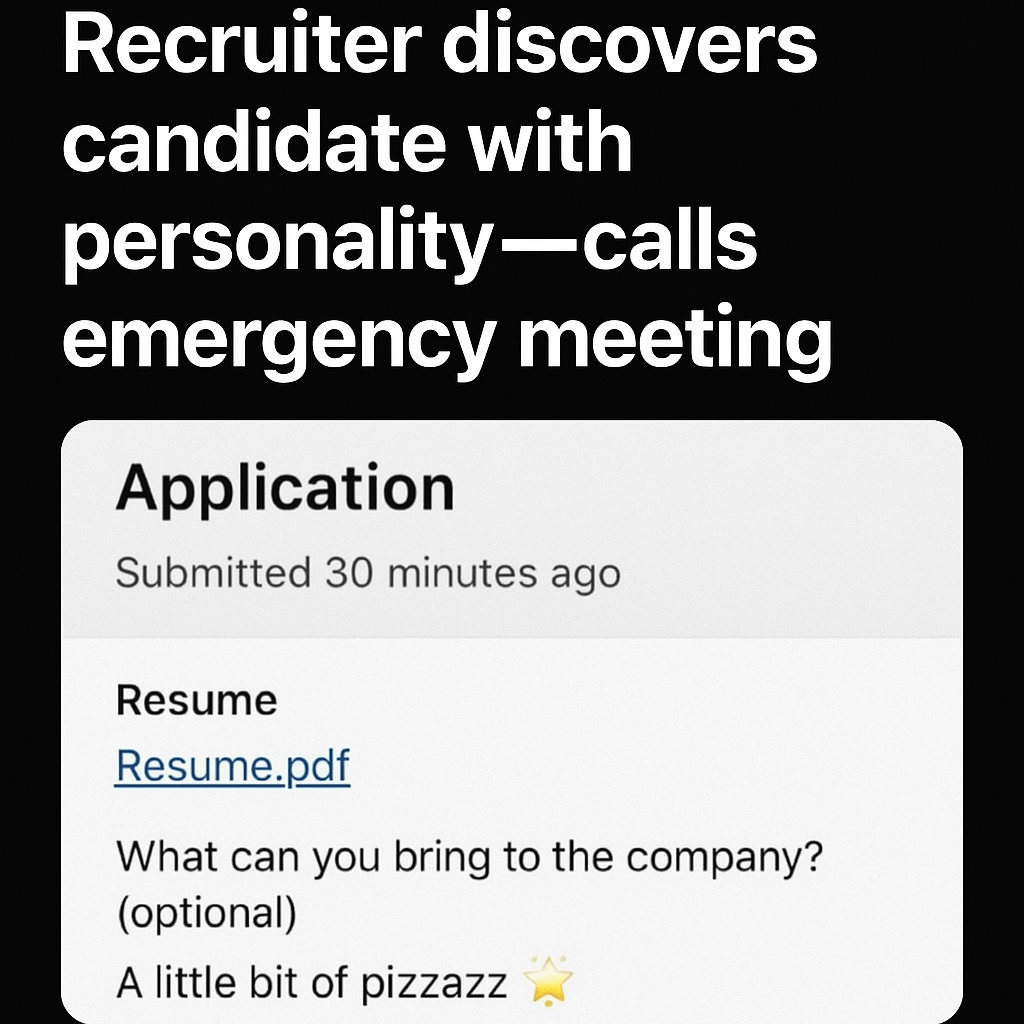
“Look at this email I received. Would you ever send something like this?”
It’s usually a screenshot of a message that dares to step outside the template. Maybe it’s too casual. Maybe it’s funny. Maybe the applicant opened with something real, like, “Hey, I’m not a corporate robot, but here’s why I think I’d be great for this role.”
The recruiter’s post often gets flooded with comments like “Unprofessional,” “You’d never get hired here,” or “People really need to learn how to write proper outreach messages.”
But here’s the thing: that candidate got their attention.
And in today’s job market, where inboxes are filled with perfectly safe, soulless copy-paste intros, that’s an achievement.
Standing Out is Supposed to Be the Goal
Recruiters say they want people who think creatively, bring personality, and stand out.
They say they want candidates who get communication.
But the moment someone actually writes something that sounds like a living, breathing human being instead of a LinkedIn prompt, the alarms go off. Suddenly, the message is “odd,” “inappropriate,” or “funny enough to share publicly.”
What they really mean is: it didn’t fit the mold.
That mold is made of the same tired lines that show up in every recruiter’s inbox:
“Dear Hiring Manager, I’m excited to apply for the role of X at Y Company. My skills align perfectly with the requirements…”
By the fifth identical message, even the most well-meaning recruiter stops reading.
Then someone writes, “Hey, this job sounds like something I could actually have fun doing. Here’s why.”
And suddenly, the recruiter feels something they weren’t expecting: attention.
The Double Standard of “Professionalism”
We’ve built a weird culture around “professionalism.”
It’s become code for “speak like everyone else.”
Professionalism should mean you show respect, communicate clearly, and take things seriously enough to do them well.
It shouldn’t mean stripping out every trace of personality, humor, or humanity from how you talk.
It’s funny, because most companies love to brag about how their teams are “diverse,” “authentic,” and “inclusive.” Yet they often penalize people for communicating differently.
If a message is disrespectful, fine. If it’s creepy, fine. If it’s spam, fine.
But if it’s simply unconventional, we should stop pretending it’s a crime.
Attention is the First Step to Connection
Let’s be brutally honest: 95% of candidate messages get ignored.
Recruiters are overwhelmed. They’re filtering hundreds of emails, LinkedIn DMs, and referrals. The truth is that most candidates will never even be seen.
So if your message gets noticed enough that someone remembers it, talks about it, or even posts about it online, you’ve already broken through the first wall: invisibility.
Attention is the currency of this whole game.
And yes, standing out comes with risk. You might not fit that recruiter’s taste. But you might hit perfectly with another one who actually values originality and wit.
That’s what good communication does. It polarizes a little. It shows flavor. It filters for your kind of people.
The LinkedIn Morality Police
There’s a whole side of LinkedIn that loves to moralize.
They’ll post screenshots of bad cover letters or strange DMs, followed by a lecture about “how not to approach a recruiter.” It’s engagement bait dressed up as mentorship.
The comments are a predictable mix of outrage and validation.
Recruiters cheer, job seekers defend, and everyone leaves feeling slightly superior.
But here’s the uncomfortable truth: every time someone posts a “weird message,” they’re giving that applicant visibility. They’re talking about them. They’re spreading their words further than the applicant ever could.
So who’s really getting the last laugh?
Authentic Beats Perfect
The job market has become so optimized, so polished, and so full of rules that genuine expression now looks like rebellion.
We’ve trained candidates to write like templates and then complain that everyone sounds the same.
We tell them to “stand out,” but punish them when they actually do.
At some point, we need to decide what we really want.
Do we want personality and creativity, or do we just want a prettier version of the same bland professionalism that’s been circulating for decades?
Because here’s the truth recruiters rarely say out loud: The candidates who stand out in the inbox are usually the ones who stand out in the job.
The same curiosity, humor, and authenticity that make a message feel “different” are often the traits that drive innovation, communication, and culture inside a team.
Respect Over Rigidity
Of course, there’s a line. You can be creative without being chaotic. You can be bold without being disrespectful. The key is intent.
If your message shows you’ve done your homework, that you understand the role, and that you’re genuinely interested, it doesn’t matter if it starts with “Hey” instead of “Dear Sir or Madam.”
We’ve all met people who are technically “professional” but impossible to work with.
And we’ve all met people who communicate in their own voice but bring value, energy, and results.
I’d hire the second type every time.
What This Says About Recruiting Culture
When recruiters feel the need to post about non-standard messages, it reveals something deeper about the culture of hiring.
There’s a subtle fear of the unpredictable.
A comfort in sameness.
But that sameness is exactly what’s choking creativity and diversity of thought in the workplace.
Hiring people who think differently means accepting that they’ll also communicate differently. If recruiters can’t handle that at the inbox stage, how are they going to handle it when those same people start changing how teams operate?
The Real Lesson
The next time you see a recruiter mocking an unusual message, remember: the candidate made an impact.
They were seen.
They were remembered.
They started a conversation.
And that’s what good communication does.
The job market doesn’t need more polished templates. It needs more honest humans who can express themselves, take risks, and speak like people who actually want to connect.
If a message makes someone stop scrolling, think twice, and maybe even feel something, then it already did its job.
So if you’re the kind of candidate who writes like a person instead of a bot, keep doing it. The right recruiter will get it. And if someone doesn’t? That’s not your audience anyway.
If I’ve written something creative in an outreach? Let’s just say that greeting a recruiter from the back of a polar bear, is not the worst I’ve written in such a context.


 The Roine Playground
Lämna en kommentar