
Let’s start by saying that this is smut. Clear and unapologetic smut. But it’s also so much more.
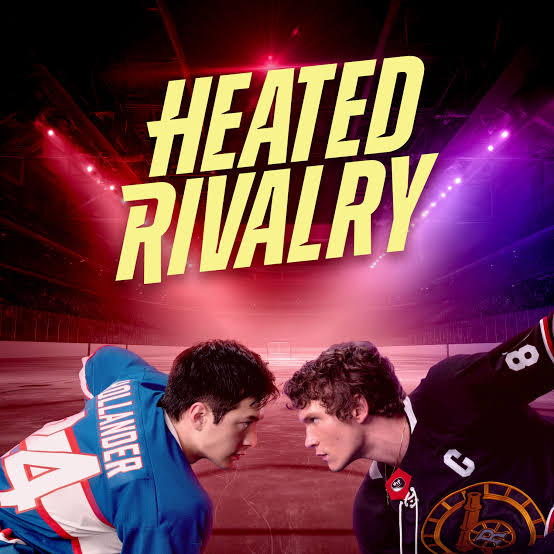
When I watched Heated Rivalry, it hit very close to home as I, in my 20’s, was briefly involved with a professional hockey player. I really identify with Kip, although not nearly as ripped or charming. And no, I will never reveal who.
Heated Rivalry belongs in the same unapologetic lineage as Brokeback Mountain, Queer as Folk, Young Royals, and God’s Own Country, not because it matches their budgets or cultural reach, but because it shares their refusal to negotiate its queerness into something polite, respectable, or easily consumable.
These are works that do not ask for permission, do not soften desire into metaphor, and do not pretend that love is enough to dismantle systems designed to punish deviation. Heated Rivalry operates with that same posture, committing to honesty even when that honesty is uncomfortable, explicit, or structurally pessimistic.
What unites these stories is not tone or genre, but intent. They reject the idea that queer narratives must justify their existence through tragedy, inspiration, or moral instruction.
Instead, they allow queerness to exist as lived experience, complete with sex, fear, contradiction, and compromise. Heated Rivalry enters that conversation fully aware of what it is doing and remains there without apology.
A queer sports story that understands systems rather than villains
One of the most persistent failures in mainstream queer storytelling is the reduction of oppression to individual antagonists. Heated Rivalry refuses that simplification by treating power as systemic rather than personal.
The pressure shaping these characters does not come from a single homophobic teammate or a conveniently hateful coach. It comes from media economics, sponsorship logic, national identity, and locker room cultures that enforce conformity through silence rather than confrontation.
The series treats these forces as environmental conditions rather than narrative obstacles that can be overcome through courage alone. They are constant, predictable, and structurally indifferent to individual suffering.
This framing places Heated Rivalry far closer to the quiet brutality of Brokeback Mountain than to sanitized sports narratives where coming out functions as a universal solvent for conflict. The story is not interested in whether the world is fair, but in how people learn to survive inside systems that have no incentive to change.
Shane and Ilya as competing survival strategies rather than moral opposites
At the center of the series are Shane Hollander (Hudson Williams) and Ilya Rozanov (Connor Storrie), two elite hockey players bound together by rivalry, desire, and a relationship that unfolds across years rather than episodes.
Shane’s closeted life is not framed as a lack of courage or self-awareness, but as the result of an acute understanding of the professional machinery surrounding him. He knows how media narratives are constructed, how sponsorships function, and how quickly deviation is punished under the guise of neutrality. His restraint is not weakness, but professional literacy.
Ilya, also in the closet, in contrast, is blunt to the point of recklessness, openly contemptuous of euphemism, and unwilling to dilute himself for the sake of convenience or safety. His honesty is electrifying, but it is also costly, and the series never pretends otherwise.
What gives their relationship its depth is the refusal to frame one approach as enlightened and the other as cowardly. Instead, the series allows these two survival strategies to collide repeatedly, creating a dynamic shaped by unresolved tension rather than moral resolution.
This refusal to simplify their conflict is one of the series most disciplined choices, as it resists turning complex emotional negotiations into digestible lessons for the audience.
Sex without apology and without narrative embarrassment
Heated Rivalry is explicit about its sexuality, and that explicitness is not incidental. The series is frank, physical, and unapologetic about desire, treating sex as an integral part of the emotional architecture rather than something to be minimized or euphemized.
These scenes establish power dynamics, emotional asymmetries, and the ways in which physical intimacy can function as both refuge and pressure valve when emotional honesty feels too risky.
Rather than aestheticizing desire into longing glances or retreating into tasteful implication, the series allows sex to be recurring, embodied, and sometimes uncomfortable.
This approach aligns it closely with Queer as Folk and God’s Own Country, both of which rejected the notion that queer sexuality must be restrained or symbolic in order to be taken seriously. Heated Rivalry operates from the same assumption, namely that desire does not need to justify itself through suffering or redemption to be legitimate.
Time as cumulative pressure rather than narrative pacing
The romantic arc of Heated Rivalry is built around endurance rather than escalation. Years pass, careers evolve, and the same emotional conflicts resurface with altered stakes shaped by habit rather than revelation.
Fear does not dissolve because it has been named once. Silence becomes learned behavior. Desire persists even when it complicates every other aspect of life.
This repetition is not narrative inertia, but emotional realism, particularly within closeted environments where progress is rarely linear and often reversible. Time itself becomes a form of pressure, gradually eroding possibilities through accumulated compromise rather than dramatic catastrophe.
In this respect, the series echoes the long shadow of Brokeback Mountain, where what remains unspoken carries as much weight as what is articulated.
The show trusts its audience to remain with this discomfort rather than rushing toward reassurance or resolution.
Scott and Kip and the refusal to moralize visibility
The inclusion of Scott Hunter (Francois Arnaud) and Kip Grady (Robbie G.K.) expands the emotional and representational range of the series without softening its central tension. Their relationship is visible, imperfect, and unceremonious, existing without narrative fanfare or moral framing.
They are not positioned as aspirational models or cautionary examples, but as evidence that queerness within the same system can manifest in different forms simultaneously.
By placing multiple strategies of visibility and discretion side by side without judgment, the series avoids turning representation into instruction. Openness is not framed as inherently virtuous, nor is caution framed as failure.
Instead, these choices are shown to emerge from different tolerances for risk, timing, and personal circumstance. This refusal to moralize visibility is one of the series’ most quietly radical decisions.
Why Heated Rivalry belongs in the unapologetic canon
What ultimately places Heated Rivalry alongside Brokeback Mountain, Queer as Folk, and God’s Own Country is not scale or prestige, but conviction. All of these works refuse to lie about queerness in order to make it easier to consume. They allow sex to exist without apology, fear to persist without neat resolution, and love to remain complicated rather than redemptive.
Heated Rivalry may not aspire to prestige television, but it achieves something sharper and more defiant by committing fully to emotional honesty and structural realism.
Leaning toward really liking the series does not feel like generosity or fandom enthusiasm. It feels like recognizing a work that understands the cost of queerness, refuses to sanitize desire, and refuses to pretend that the world watching it has suddenly become safe.


 The Roine Playground
Lämna en kommentar